
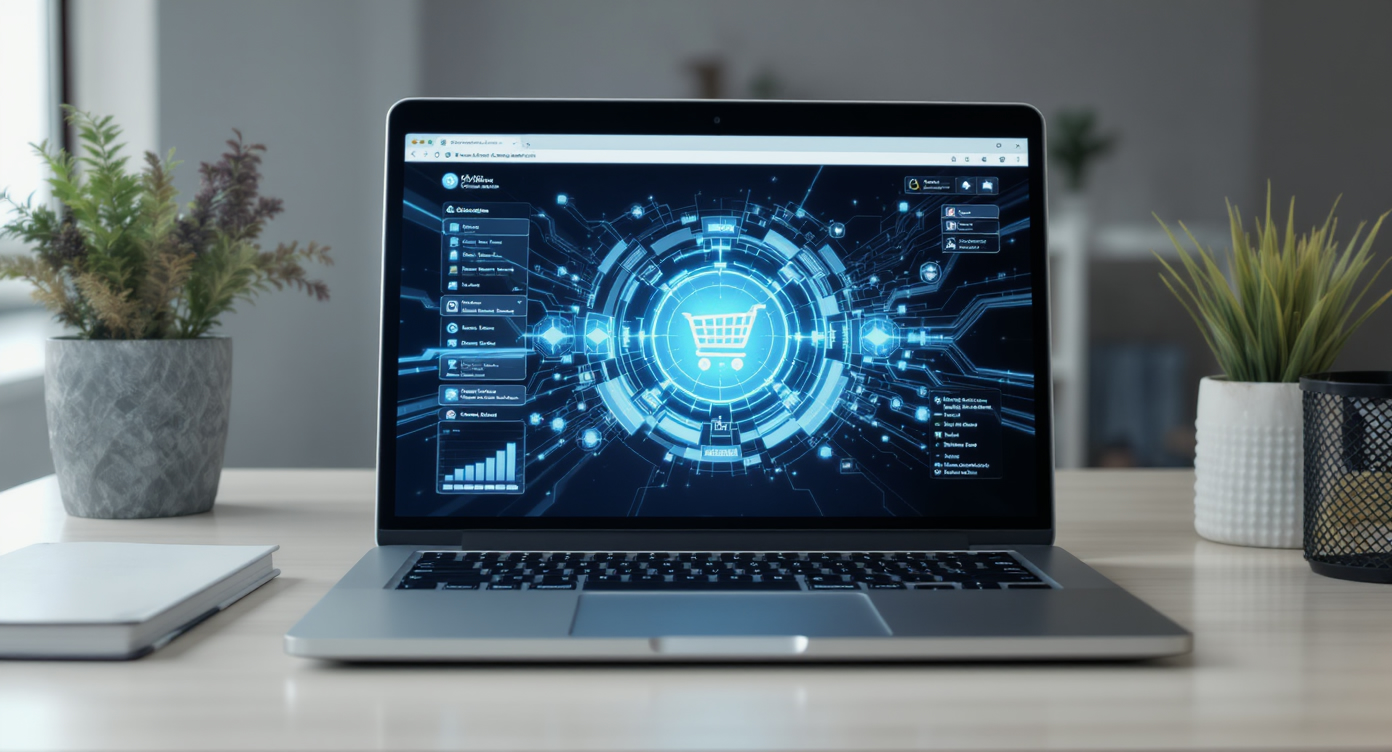
e-commerce automation guide E-commerce delivery automation refers to the coordinated use of software systems that intelligently route orders, assign carriers, generate labels, update tracking, and sync delivery status across sales channels, ERP, and customer touchpoints—reducing manual handoffs and human error while scaling fulfillment operations.
E-commerce delivery automation is no longer a luxury reserved for enterprise retailers. It’s the operational backbone enabling brands—regardless of size—to ship faster, track accurately, and scale without adding headcount or complexity. In today’s expectations-driven market, where 73% of shoppers cite delivery speed and transparency as top purchase influencers, automation bridges the gap between promise and performance. Yet most teams still rely on brittle point solutions, spreadsheet-based routing, or custom scripts that break with every API update.
That’s where intentional architecture matters—not just automation for automation’s sake, but delivery orchestration designed for resilience, auditability, and business alignment.
Key Takeaways
- E-commerce delivery automation integrates order management, carrier APIs, warehouse systems, and customer notifications into a single event-driven workflow—not a collection of disconnected tools.
- The Savage Build Framework begins with a 5-day discovery sprint to define success metrics rooted in business KPIs like on-time shipment rate, carrier cost per parcel, and post-delivery CSAT—not just technical uptime.
- Automation-first integration design uses idempotent, schema-validated events with built-in retry logic and real-time monitoring dashboards—ensuring reliability across CRM, ERP, and custom fulfillment platforms.
Why Manual Delivery Coordination Doesn’t Scale
When orders flow from Shopify, Amazon, Walmart Marketplace, and wholesale portals into a single warehouse, manual coordination becomes a bottleneck—and a liability. Teams copy-paste SKUs into carrier portals, retype addresses, cross-check inventory levels in spreadsheets, and chase exceptions via email threads. One missed carrier cutoff means delayed shipments. One misformatted address triggers label rejection. One unlogged exception stalls customer service.
Worse, these processes rarely improve with volume—they degrade. What works for 50 daily orders collapses at 500. And when new sales channels launch, or carriers change their API requirements, the entire workflow must be reverse-engineered and rebuilt.
This isn’t inefficiency—it’s architectural debt disguised as process.
Automation isn’t about replacing people. It’s about eliminating repetition so teams focus on exception resolution, carrier negotiation, and customer experience design—not data entry.
The Savage Build Framework: From Chaos to Coordinated Delivery
We don’t start with code. We start with context.
The Savage Build Framework kicks off with a 5-day discovery sprint—remote, collaborative, and outcome-oriented. Stakeholders from operations, logistics, IT, and customer service join structured interviews to surface pain points, map existing system handoffs, and identify hidden dependencies (e.g., “We can’t auto-assign UPS unless the order value exceeds $75—because our legacy ERP won’t trigger the discount rule otherwise”).
We then conduct a technical debt assessment: Which integrations lack error logging? Where do manual overrides happen—and how often? What carrier rules are hardcoded versus configurable?
Out of this emerges a test-driven development roadmap—prioritized not by engineering effort, but by business impact. For example:
Every milestone ties directly to KPIs—like reducing average time-to-label generation from 12 minutes to under 90 seconds—or cutting carrier-related support tickets by 65%.
Automation-First Integration Design: Reliability Over Speed
Many “automated” delivery workflows fail silently. A carrier API returns a 503 error, the script times out, and the order sits unprocessed—until someone notices hours later.
True reliability starts with design philosophy—not tool selection.
Our automation-first integration pattern treats every interaction as an idempotent event: same input always yields same output, even if retried 10 times. Each carrier request includes strict schema validation before hitting the API—rejecting malformed addresses or missing dimensions before label generation fails.
We embed retry logic with exponential backoff and circuit breakers—not just “try again in 5 seconds.” Failed events land in a monitored queue with rich context: which order, which carrier, what payload, what response code, and how many retries attempted.
And because observability drives trust, every integration ships with a real-time dashboard showing:
This isn’t “set and forget.” It’s auditable, explainable, and actionable.
Growth-Aligned SEO Delivery: When Fulfillment Impacts Discovery
Here’s a truth rarely discussed: your delivery automation affects organic search performance.
How? Two ways.
First: page speed. Heavy, unoptimized delivery widgets—like embedded carrier trackers that load third-party JavaScript on every order confirmation page—drag down Core Web Vitals. Poor Largest Contentful Paint (LCP) and Cumulative Layout Shift (CLS) hurt rankings. Our delivery automation includes lightweight, deferred tracking embeds—only loading after user interaction or on dedicated tracking pages.
Second: content signals. Automated delivery updates power dynamic, indexable post-purchase content. Instead of static “Your order shipped” emails, we generate unique, crawlable tracking pages per order—featuring structured data (Schema.org Order and ParcelDelivery markup), localized delivery estimates, and FAQ-rich sections (“What if I’m not home?”). These pages earn long-tail visibility for queries like “my [brand] order tracking” or “[city] next-day delivery.”
Our Growth-Aligned SEO Delivery strategy audits these touchpoints—then optimizes them using GA4 behavioral flows and Google Search Console impression data—to ensure fulfillment infrastructure supports, rather than undermines, organic growth.
Beyond Labels: Intelligent Delivery Orchestration
Label generation is table stakes. Modern e-commerce delivery automation goes deeper—orchestrating decisions, not just actions.
Consider intelligent carrier assignment. Basic automation picks the cheapest option. Intelligent orchestration weighs:
Or consider dynamic fulfillment routing. An order from Seattle may pull from a Portland warehouse unless that location is backordered—then it auto-routes to Reno, with updated ETAs pushed instantly to the customer portal and SMS.
These aren’t theoretical features. They’re configured—not coded—using declarative rules engines tied to live data streams: inventory APIs, carrier SLA feeds, and customer lifetime value scores.
The result? Fewer exceptions, higher first-attempt delivery rates, and fulfillment that adapts—not just executes.
Integrating With Your Stack: ERP, WMS, and Custom Tools
No two tech stacks are identical. One brand runs NetSuite with a custom-built warehouse module. Another uses Cin7 with ShipStation and a Shopify Plus headless storefront. A third relies on SAP S/4HANA with bespoke logistics extensions.
That’s why our delivery automation never assumes a “standard stack.”
Instead, we begin by mapping your current ecosystem—not just what you use, but how you use it. Does your ERP push inventory updates hourly—or only on manual sync? Does your WMS expose real-time pick status, or only final ship confirmation? Which fields in your CRM are mandatory for delivery notifications—and which are optional but valuable for segmentation?
From there, we design integrations using event-driven patterns—not polling. When Shopify emits an orders/create webhook, our system validates, enriches (e.g., appending warehouse ID from inventory lookup), and publishes to a delivery orchestration topic. ERP listens for shipment/confirmed, updates financials, and fires invoice/generate. Customer service tools listen for exception/raised and auto-create tickets.
All integrations include:
This decouples systems while ensuring consistency—no more “source of truth” debates.
Measuring What Matters: KPIs That Reflect Business Health
Automation without measurement is theater.
We align delivery automation KPIs to outcomes—not outputs. Not “number of labels generated,” but:
Each KPI is instrumented at the source—no manual exports or dashboard stitching. GA4 event tracking captures customer-facing interactions (e.g., “tracking_page_view”, “delivery_confirmed”), while backend logs feed operational dashboards.
And because growth isn’t linear, our dashboards include cohort analysis: How does Week 1 post-automation compare to Week 1 pre-automation—not just in volume, but in cost efficiency and customer sentiment?
This turns delivery from a cost center into a measurable driver of retention and LTV.
Related Reading
Frequently Asked Questions
Q: What is e-commerce automation?
A: E-commerce automation refers to the use of software to handle repetitive, rule-based tasks across the online retail lifecycle—including inventory syncing, order routing, email/SMS notifications, returns processing, and delivery coordination—freeing teams to focus on strategy, optimization, and customer relationships.
Q: What are the 5 C's of ecommerce?
A: The 5 C's of ecommerce are Customer, Cost, Convenience, Communication, and Commerce. This customer-centric framework shifts focus from traditional marketing’s 4 P’s (Product, Price, Place, Promotion) to prioritizing buyer needs, perceived value, frictionless access, transparent dialogue, and seamless transaction execution.
Q: What are some popular e-commerce automation platforms?
A: Popular e-commerce automation platforms include Zapier and Make for lightweight workflow automation, ShipStation and Shippo for shipping-specific orchestration, and enterprise-grade solutions like Manhattan Active Omni and Oracle Retail Order Management—each varying in scalability, carrier depth, and ERP/WMS compatibility.
Q: What is an e-commerce delivery?
A: An e-commerce delivery is the physical transfer of purchased goods from a seller’s fulfillment center to an end customer’s specified location, typically initiated after online order confirmation and involving carrier selection, label generation, transit tracking, and final-mile confirmation.
Q: How does delivery automation integrate with ERP systems?
A: Delivery automation integrates with ERP systems through secure, event-driven APIs that exchange real-time data—such as order details, inventory availability, shipment confirmations, and tracking numbers—enabling synchronized financials, accurate stock levels, and automated accounting entries without manual reconciliation.
Ready to automate your e-commerce delivery operations? Contact Savage Digital Solutions for a free consultation.