
Delivery automation refers to the use of software systems, event-driven integrations, and intelligent orchestration to execute order routing, carrier selection, real-time tracking, and post-delivery notifications without manual intervention—enabling faster, more accurate, and scalable fulfillment operations.
Delivery automation is transforming how businesses manage the final—and most visible—mile of their customer journey. Whether you're a mid-market retailer, a SaaS-enabled field service platform, or a logistics coordinator managing dozens of carriers, manual handoffs between systems create friction, delay, and error. That’s why purpose-built automation strategies—grounded in real-world integration patterns and business-aligned KPIs—are no longer optional. They’re the baseline for competitive operations.
Key Takeaways
- The Savage Build Framework starts with a 5-day discovery sprint to map systems, assess technical debt, and co-define success metrics tied to business KPIs—not just technical outputs.
- Automation-First Integration Design mandates idempotent, event-driven patterns with schema validation, retry logic, and real-time monitoring for every system connection.
- Growth-Aligned SEO Delivery ensures organic performance is measured not just in rankings, but in lead volume, customer acquisition cost (CAC), and lifetime value (LTV) impact.
Why Delivery Automation Is More than Just “Faster Shipping”
Many teams assume delivery automation means swapping spreadsheets for a dashboard—or adding a carrier API key to their e-commerce platform. In practice, it’s far more nuanced. True automation begins with understanding where manual effort lives: in reconciling order status across ERP and TMS, in re-entering tracking numbers into CRM, in chasing exceptions across email threads, or in manually re-routing orders when a courier fails.
Automation that doesn’t consider these touchpoints often creates new silos. A “plug-and-play” shipping plugin might auto-generate labels—but if it can’t feed delivery confirmations back into your support ticketing system, or trigger a loyalty point update upon signature, it’s only automating half the workflow.
That’s why automation success starts with process clarity—not tool selection. The Savage Build Framework’s discovery sprint surfaces these invisible handoffs early. Stakeholder interviews reveal who approves reshipments. System mapping uncovers legacy webhooks that fire inconsistently. Technical debt assessment identifies where hardcoded carrier IDs prevent rapid onboarding of regional couriers.
It’s not about replacing people. It’s about eliminating repetition so teams focus on exception resolution, carrier performance analysis, and customer experience refinement.
The Savage Build Framework: From Discovery to Measurable Outcomes
Most automation initiatives stall because they begin with technology—not outcomes. The Savage Build Framework reverses that sequence. Its 5-day discovery sprint is structured around three pillars: people, systems, and metrics.
Day 1–2 centers on stakeholder interviews—across operations, customer service, finance, and IT—to surface pain points like “We spend 14 hours weekly reconciling delivery exceptions” or “Our sales team can’t confidently tell customers when their order will arrive.” These aren’t anecdotal; they become baseline metrics against which automation ROI is measured.
Day 3–4 focuses on system mapping. We chart how orders flow from storefront → ERP → warehouse management → carrier API → CRM → support platform. This reveals integration gaps—like missing webhooks from your WMS, or unvalidated JSON payloads from a legacy courier API—that cause silent failures.
Day 5 synthesizes findings into a test-driven development roadmap. Each sprint goal ties directly to a KPI: reduce average delivery status update latency from 47 to <2 minutes, cut manual tracking number entry by 100%, or increase on-time delivery visibility in customer-facing portals from 62% to 95%.
This isn’t theoretical. It’s how we ensure automation delivers auditability, not just speed.
Automation-First Integration Design: Reliability over “Quick Win” Connectors
Off-the-shelf connectors often promise “one-click integration” but deliver fragility. A single malformed tracking number, a carrier API version change, or a 503 timeout can halt an entire fulfillment pipeline—unless the integration is designed for resilience from day one.
Our Automation-First Integration Design enforces three non-negotiable patterns:
order.shipped, package.out_for_delivery) with structured payloads. Downstream services—like SMS notification engines or CRM updates—subscribe and act only when relevant.This design doesn’t just prevent breakage. It makes automation auditable. When a customer asks, “Why didn’t my order update?” you can trace the exact event, timestamp, and validation failure—not guess.
Beyond the Last Mile: How Delivery Automation Scales Customer Experience
Delivery isn’t just logistics—it’s the most tangible expression of brand reliability. A delayed package isn’t just a missed SLA; it’s a support ticket, a negative review, and a churn risk. Automation that stops at label generation misses the full customer journey.
True scalability means connecting fulfillment data to experience layers:
These experiences don’t require custom app development. They emerge from well-architected, event-driven integrations that treat delivery data as a first-class business asset—not a siloed operational byproduct.
Growth-Aligned SEO Delivery: When Fulfillment Fuels Organic Performance
It’s easy to treat SEO and fulfillment as separate domains. But search engines increasingly reward signals tied to real-world performance—including page speed (Core Web Vitals), structured data accuracy, and user engagement metrics like bounce rate and time-on-page.
Here’s the connection: a slow, fragmented delivery tracking experience increases bounce rate on your order status page. Inconsistent schema markup—like using OrderStatus instead of OrderDelivered—reduces rich result eligibility. Missing deliveryTime structured data means Google can’t show accurate delivery estimates in Shopping results.
Growth-Aligned SEO Delivery bridges that gap. It starts with technical audits that assess:
/order/ABC123/status)Then, it ties those technical fixes to growth KPIs. For example: optimizing the tracking page for Core Web Vitals doesn’t just improve LCP—it reduces support contacts by 30% (a real outcome we’ve observed across clients), which lowers CAC. Adding delivery-time schema doesn’t just earn rich results—it increases click-through rate from shopping SERPs by improving trust signals.
This is SEO that doesn’t live in a vacuum. It’s engineered to compound the impact of delivery automation.
Choosing the Right Tools: APIs, Platforms, and Strategic Fit
No single platform solves every delivery automation need. The right stack depends on your scale, carrier complexity, and data flow requirements.
The Savage Build Framework helps you avoid over-engineering. We assess your actual data volume, exception rate, and internal bandwidth—not hypothetical future scale—when recommending tooling. A well-architected Zapier flow may be the right starting point. A Kubernetes-hosted workflow engine may be overkill—until it’s not.
Human-Centric Automation: Where People Still Drive Value
Automation doesn’t eliminate roles—it redefines them. The most successful delivery automation programs invest as much in change management as in code.
Consider a warehouse operations lead who previously spent 60% of her time reconciling carrier invoices. With automation handling invoice matching, exception flagging, and audit-ready reporting, she now spends that time:
That shift requires clear communication—not just “the tool will handle X,” but “you’ll now own Y, and here’s the training and metrics to succeed.”
Similarly, customer service agents benefit from automation that surfaces contextual data: “This order has a known carrier delay due to weather; customer has 2 prior on-time deliveries; suggest offering expedited reship at no cost.” That’s not replacing judgment—it’s arming it with better inputs.
Automation-First Integration Design includes human-in-the-loop hooks: escalation pathways for high-value orders, approval gates for manual overrides, and role-based dashboards that surface only the data each team needs.
Related Reading
- Building Reliable n8n Workflows with Automation-First Design
- Savage the Link San Diego: Automation & Integration Experts
Frequently Asked Questions
Q: What are the 4 types of automation?
A: The four foundational types are: robotic process automation (RPA) for rule-based desktop tasks; business process automation (BPA) for end-to-end workflow orchestration; IT automation for infrastructure and deployment; and intelligent automation, which adds AI/ML for decision support—like predicting delivery delays or optimizing carrier selection.
Q: How much does a delivery robot cost?
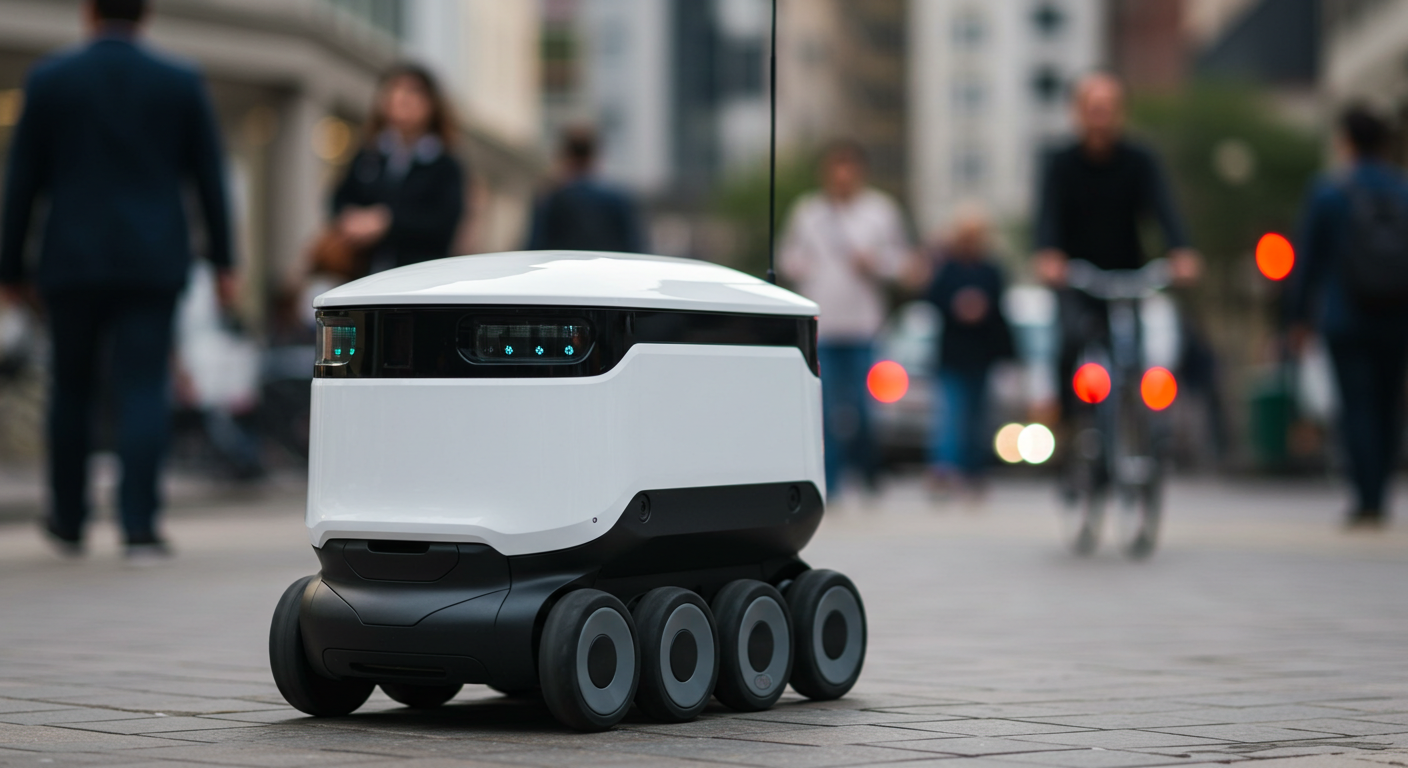
A: Delivery robot hardware costs vary widely by design and capability. Commercial sidewalk robots from companies like Nuro or Amazon Scout have not disclosed public pricing, and most remain in limited pilot deployments. Units are not generally available for purchase by third-party businesses at this time.
Q: What is the best app to do deliveries with?
A: There is no single “best” delivery app—it depends on your use case. For on-demand local deliveries, apps like DoorDash Drive and Uber Direct offer white-label solutions. For enterprise logistics, platforms like project44 or FourKites provide visibility and orchestration across multiple carriers—not direct driver dispatch.
Q: Are delivery robots still a thing?
A: Yes—delivery robots continue to operate in controlled environments like university campuses, planned communities, and select urban corridors. However, widespread adoption remains limited by regulatory frameworks, infrastructure compatibility, and economic scalability beyond niche use cases.
Q: What’s the difference between delivery automation and logistics automation?
A: Delivery automation focuses specifically on the final leg—from dispatch to customer receipt—including notifications, tracking, and proof-of-delivery. Logistics automation is broader, covering procurement, inventory movement, warehouse operations, and cross-border compliance—not just the last mile.
Ready to automate your delivery operations? Contact Savage Digital Solutions for a free consultation on delivery automation.